
FLI is a recognized leader in the design and manufacture of cooled CMOS and CCD cameras for applications such as astronomy, life sciences, forensics, electron microscopy, and Space Domain Awareness.
Proudly engineered, built, and serviced in New York, our products showcase the expertise of a skilled team of mechanical, electrical, and software engineers. Trusted by customers in over 50 countries, FLI delivers high-performance imaging solutions tailored to diverse needs.
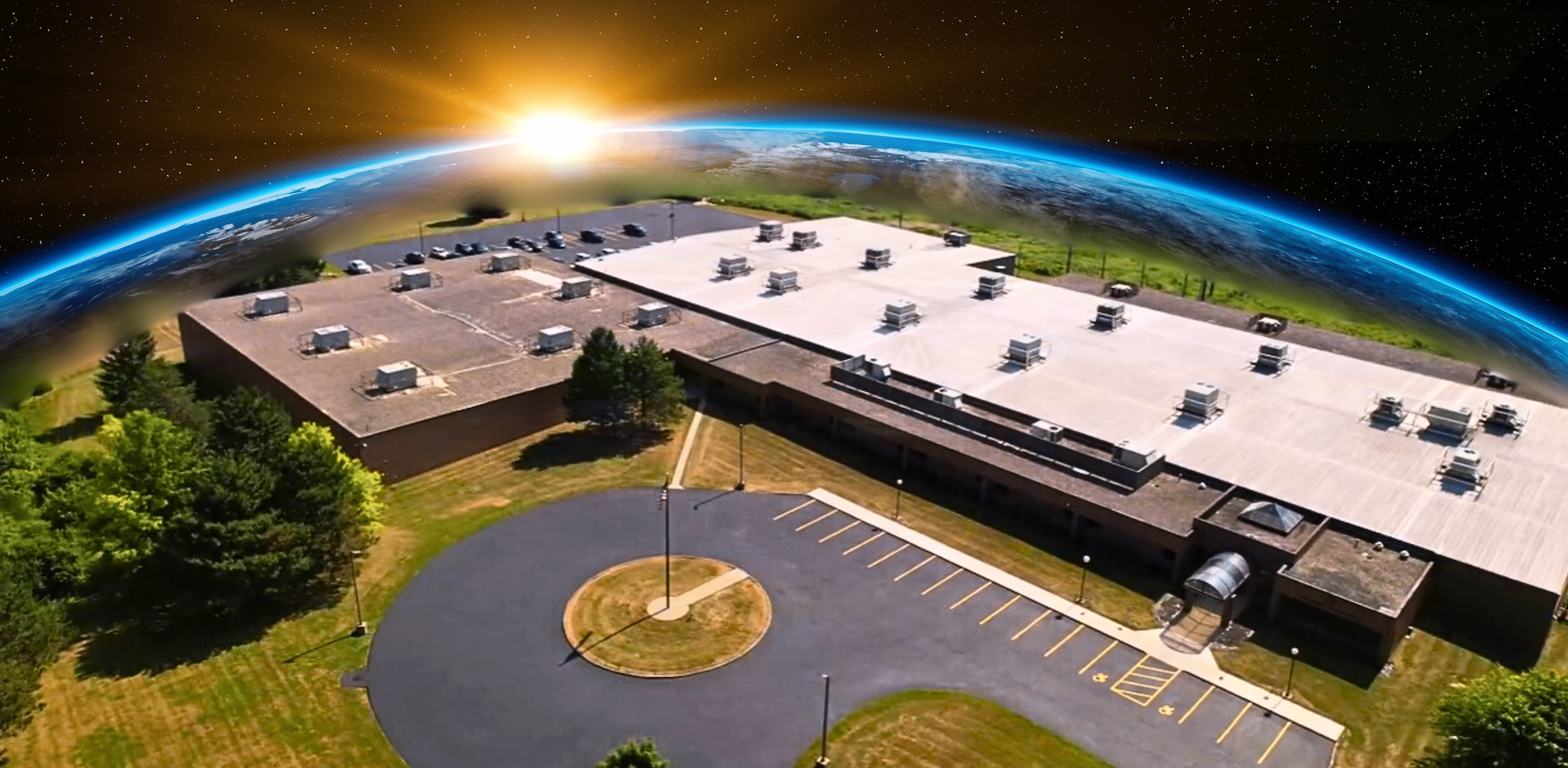
We warmly invite you to visit our new facility in Rochester, NY, USA, to explore our capabilities firsthand.
AS9100D / ISO 9001:2015 certified by TÜV Rheinland (Reg. No. 74 300 6037, valid through Oct 2, 2028).
ITAR compliant.
CMMC Level 2 compliant.

2821 NW Market ST, STE A Seattle
WA 98107
373 E. Foothill Blvd, Suite 200 San Dimas
CA 91773 USA
111 Pointe of Woods Dr. Parlin
NJ 08859 USA
5348 Topanga Canyon Blvd. #101, Woodland Hills
CA 91364 USA
China
29 Shangdi Zhufang Rd Haidian District Beijing 100085
China
Rm1-1705, Guoji Keji Chuangye Garden No.1 ShangdiXinxi Road
Haidian District Beijing 100085
China
Room 1906, No. 12, Xiujuyuan
Beiyuan Jiayuan, Chaoyang District, Beijing
China
Building No.7, Yard No.13, Cuihu Nanhuan Road
Haidian District, Beijing, China
China
Room 702, Building 1, Greenland Weike International, Lane 423, Xincun Road
Pu Tuo District, Shanghai (near Xincun Road Station, Metro Line 7), China
China
Room 425, Building 1, Mingliang Technology Park
No.88 Zhuguang North Road, Xili street, Nanshan District
China
Dongshan Commercial Building 13-16, Huanshi Rd. N, Rongcheng
Jieyang City, Guangdong Province, P.R. China
China
RM.G, 17 Floor, Jin'an Building
No.300-1 DongFeng Middle Road Guangzhou City, Guangdong Province 510030
Germany
ASTELCO Systems GmbH Robert-Bosch-Str. 14 82054 Sauerlach Germany
Germany
Baader Planetarium GmbH, Zur Sternwarte 4
82291 Mammendorf, Germany
Hong Kong
6R Valiant Industrial Centre, 2-12 Au Pui Wan Street, Fo Tan
NT, HONG KONG
Singapore
21, Jurong Town Hall Road
Omni Theatre Singapore Science Centre, Science Centre Rd Singapore 609433

Yes, please refer to the attached Warranty details and purchase Terms & Conditions.
To begin a return, please refer to the attached Return Instructions and RMA Request Form.
Yes, FLI has products in more than 50 countries worldwide. Take a look at our customer list.
For most scientific applications, a monochrome CCD is the best choice for several reasons.
First of all, you have control over the filter sets used. You may want to change from RGB to CMY to photometry filters or narrow band filters. A color CCD has a fixed set of filters, typically in a Bayer pattern (red-green-green-blue). If you use a blue filter in front of a color CCD, only one of 4 pixels will see any significant amount of light. Color CCDs can deliver a color image in a single shot, but they compromise spatial sampling.
A 10 megapixel color sensor is not delivering 10 megapixels of red, and 10 megapixels of green, and 10 megapixels of blue. A monochrome sensor acquiring a red, green, and blue image using a filter wheel acquires 10 megapixels of each. Typically you cannot bin color CCDs (you can, but the results will have limited utility).
Interline CCDs use part of each pixel to collect light, and part of each pixel to store and move charge. The storage area has a metal mask to prevent corruption of the image during readout.
New CCDs have a microlens over each pixel to focus incoming light onto the photodiode portion of the pixel so that light is not lost landing on the metal masks. Because only part of the pixel is used to collect light, the full well capacity of interline CCDs is typically lower than comparably sized full frame pixels.
Interline transfer CCDs shutter the image by moving the charge from the photodiode to the storage diode side of the pixel. As a result, interline exposures can potentially be very short. For FLI cameras, interline exposure times can be as low as 30 microseconds (as opposed to about 30 milliseconds for an electromechanical shutter).
Usually interline CCDs are used without electromechanical shutters. However, it is complicated to take a dark image without a shutter unless you have some way of keeping the camera in a 100% dark environment. Full frame sensors use 100% of each pixel to collect, store, and transfer charge. They require an electromechanical shutter unless the camera is going to be used in a 100% dark environment. Full frame devices typically have higher full well capacities and higher quantum efficiencies than interline sensors.
Near infrared light can penetrate 200 or more microns into CCDs. As a result, when CCDs are thinned to 15 microns thick, NIR (especially beyond 800 nm) can penetrate to the back of the CCD and reflect off the back (and again off the front, and again off the back, etc), creating a ring of halos around a bright point source.
Deep depletion CCDs have high QE in the NIR, but they also have etaloning. Front-illuminated CCDs such as the Truesense KAF-1001E have less QE in this region but do not suffer from etaloning.
Residual bulk imaging. CCDs are normally 500 microns thick. The gate structures are at the top, and create wells that extend 10 or 15 microns into the CCD. But near IR light can penetrate into the CCD far beyond the reach of the wells created by the gates. This charge gradually leaves the CCD (over hours or days), creating a ghost image in subsequent images.
If the CCD is warmed up, the charge will leave the CCD. However, it is not practical to warm up the CCD between images.
Alternatively, some cameras provide a pre-flash that uniformly illuminates the CCD, leaving no place for such charge to accumulate below the epitaxial layer. This preflash does slightly lower the full well capacity of the sensor.
CCDs create charge from incoming light (the photoelectric effect, for which Einstein got a Nobel prize) but also from thermal energy.
For very short exposures with plenty of light (the kids at a soccer game), you don't notice the thermal part of the image. But for low light applications like astronomy and fluorescence, you want to minimize thermally generated charge so you get a better image of light-generated charge.
Also, cooling lowers noise and greatly reduces cosmetic defects on the sensors. Cooled sensors must be housed in a sealed, dry environment in order to prevent condensation of moisture from the air.
FLI uses Peltier devices, which are thermoelectric coolers that get cold on one side and hot on the other when electricity is applied.
Designing a CCD chamber than can keep a seal for many years is part of the engineering; efficiently dissipating the heat generated by the cooling is another part.
Typically the temperature sensor for a camera is installed in a copper block that links the CCD to the Peltier cooler.
If there is a problem with contact between the copper block and the sensor, the block may be cold but the sensor may not be fully cooled. In this case, you can see dark current values that are inconsistent with reported temperature of the camera.
AIMO = Advanced Inverted Mode Operation. NIMO = non-IMO.
Some e2v CCDs, such as deep depletion devices, cannot be operated in inverted mode. As a result, dark current is 100-200X higher than AIMO CCDs.
Instead of 0.1 electron per pixel per second (eps) of dark current, for example, expect 10 eps. AIMO vs NIMO is not a choice made by a camera manufacturer like FLI. The CCD is manufactured by e2v either as AIMO, IMO, or NIMO.
How many pixels can I bin? Binning is the process of adding pixels together on the CCD itself in order to increase the signal to noise ratio. Binning 2x2 (adding together 4 pixels) does not increase readout speed by a factor of 4, but rather by a factor of about 2.
The amount of time to do vertical transfers is not reduced; however, the amount of time required for digitization is almost cut in half. FLI cameras allow arbitrary X and Y binning (2x2, 2x8, 1x20, etc.).
The limitation is the full well capacity of an individual pixel versus the full well of the serial register versus the full well of the output. Usually the serial register and output have about twice the capacity of a pixel.
If the amount of charge in the pixels is low, then binning many pixels will not exceed the capacity of the serial register. However, if the exposure time is nearly filling the wells of individual pixels, then binning needs to be carefully limited.
The MicroLine cameras are much smaller and lighter than ProLine cameras. For most sensors, the ProLines are 3 or 4 degrees colder than the MicroLines. The ProLines provide power and USB for accessories such as filter wheels and focusers, so you only have to run one set of cables to the camera, and a short set of cables from the camera to accessories. Both the inner (CCD) and outer (electronics) chambers of the ProLine are sealed.
Please see the chart of Sensor Sizes.
